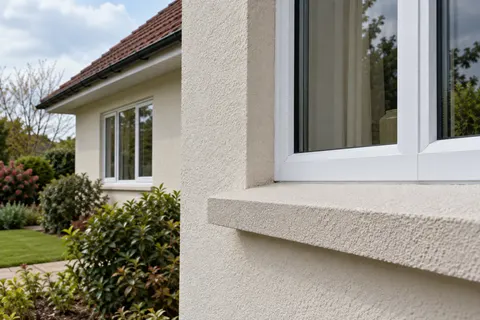
Recolouring existing render
Render Respray in Holmes Chapel | Colour Changes
A colour change can refresh an exterior without replacing a sound render system. It cannot make loose render adhere, straighten a poorly prepared surface or remove a coarse texture. The useful first distinction is between changing the colour of a suitable background and repairing the background itself. Once that is clear, the coating, preparation and application method can be specified together.

On this page
Find out what the coating would be attached to
An existing elevation may have bare mineral render, a previous masonry paint or several coats of unknown material. Those are different starting points. The condition of the surface, the adhesion of older coatings and the compatibility of the proposed new coating all need to be considered.
Cleaning may reveal more than it solves. A dirty surface can conceal cracks or weak paint; a chalky one may need a preparation method suited to its condition. The quotation should describe that method rather than using preparation as a single unexplained line. If a trial is needed, agree what it is intended to establish and how its results will affect the specification.
Loose or defective areas belong in a repair scope before the coating stage. Our render repair guide covers that distinction. Where the finish is extensively failed, a replacement proposal may be more appropriate than increasingly elaborate attempts to coat it. The desired colour should not decide whether the underlying material is sound.
- Clean Washed down, with algae and mould treated and left to work.
- Repair first Cracks and hollow patches are repaired before any coating.
- Prime or stabilise Where the coating maker requires it on that surface.
- Coating Usually two coats of a breathable masonry or silicone coating.
The usual order of work. The survey and the chosen products decide the actual steps.
Spraying is an application method, not a product specification
The word respray describes how a coating may be applied. It does not identify the coating, its compatibility or the required preparation. A useful proposal names the product and its intended use on the accepted background, then describes the application and protection arrangements.
Some parts of a building may need different handling from broad open faces. Recesses, intricate edges and areas beside vulnerable surfaces require careful control. The contractor should choose an appropriate method within the product instructions and the site conditions. Do not assume that every surface must be sprayed merely because that word appears in the service title.
For traditional masonry, the choice of coating needs particular care. The lime rendering page discusses the relationship between older construction and compatible finishes. A general claim that a paint is breathable is not enough to establish suitability for every layered wall.
| Item | Why it matters |
|---|---|
| Existing surface | Establishes what the new coating must adhere to |
| Repairs | Deals with defects before decoration |
| Coating | Names the material and intended use |
| Application | Describes how the surfaces and edges will be treated |
| Protection | Identifies glazing, roofs, paths and neighbouring property |
Test the colour where it will be seen
A sample beside a retained window frame is more useful than a colour chosen only on a phone. Include the roof and brickwork in your view. Try the sample on the relevant elevation if practical, or use a representative panel that can be moved between positions. Observe it in more than one lighting condition.
On a bungalow, the wall may be seen close up along a path and at a distance from the road. Both views matter. A shade that seems subtle on a small panel can have a stronger effect across a long frontage. The sample should help you choose deliberately rather than promise an exact reproduction of a screen image.
If only part of the building is being coated, decide how it meets the unchanged part. A clear boundary at a corner is different from a colour transition through an open wall. Keep the approved colour reference and define the included surfaces, including returns and the area beneath sills.
Protection is a substantial part of the work
Glazing, frames, roof edges, paving and adjacent brickwork need protection appropriate to the application. So do items that are easy to overlook, such as vents, exterior lights and door furniture. Identify what will be masked, what will be removed and who will reinstate it.
The working area should account for occupants and neighbouring property. A side passage may be both the route to the garden and the place where work is taking place. Plan that conflict before the coating is ready to apply. Weather conditions and the product’s application limits also need to govern the programme.
Where a conservatory blocks access, define the extent that can actually be reached and the access method proposed. A visible strip above its roof may still require specialist access. The wall rendering guide explains how a marked elevation can prevent a general description from overstating the included work.


Inspect the coverage without expecting a new wall
At completion, check that the agreed areas, returns and edges have been treated and that protection has been removed without leaving unfinished details. Look for omitted fittings or surfaces rather than assuming a fresh colour means the entire scope is complete.
The retained texture will still influence the appearance. A coating may emphasise an uneven surface under certain light, and a patch may remain visible in profile even when the colour is consistent. These are reasons to establish the expected result before work, not excuses to leave an agreed defect unresolved. Where a sample was accepted, keep it available for the final comparison instead of relying on an old photograph whose lighting may be quite different.
Keep the coating reference, preparation record and maintenance instructions. If a later repair or extension needs to relate to the finish, those details provide a useful starting point. For a larger change involving replacement materials, compare silicone and monocouche through the Rendering Holmes Chapel homepage.
Common questions
Will a respray make pebbledash smooth?
No. A colour coating follows the existing texture. If you want the coarse profile removed or substantially changed, that is a different preparation and replacement discussion.
Can I coat only a repaired patch?
Possibly, if the product and background are suitable, but the colour difference may remain noticeable. Compare a local coating with a sensibly bounded wider area and agree the expected appearance.
Does a new colour need permission?
That depends on the property, its designations and any applicable restrictions. Check the relevant planning and heritage records for the address before assuming that a decorative change is unrestricted.
See housing and planning information for Holmes Chapel and nearby places, including the source and geography behind each figure.